

KEYENCE Adds AI Navigation to RPA, Targeting the Biggest Barrier: Getting Started
A customer example documents a 45-minute daily task reduced to under five minutes.
In those environments, the friction isn't only technical; it's time, confidence, and continuity when workflows change.
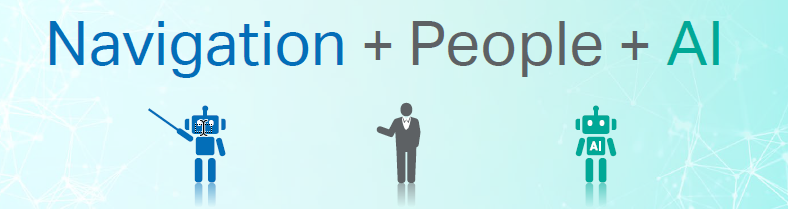
KEYENCE's RK frames adoption around three types of support: 1.Navigation support (guided build experience) ,2.Personal support, 3. AI assistance
Keyence_logo
ITASCA, IL, UNITED STATES, April 22, 2026 /EINPresswire.com/ -- A customer example documents a 45-minute daily task reduced to under five minutes.
In many organizations, “automation” doesn’t fail because people don’t see the value—it fails because the first usable workflow is hard to build, harder to maintain, and often trapped in one person’s know-how. KEYENCE Corporation of America says it is taking direct aim at that gap with an approach it describes as “AI Navigation RPA,” designed to help non-technical teams move from intention to an auditable, repeatable workflow. Unlike traditional RPA platforms that assume prior scripting or automation experience, KEYENCE’s approach combines guided workflow creation with AI-based assistance to reduce the learning curve for first-time users.
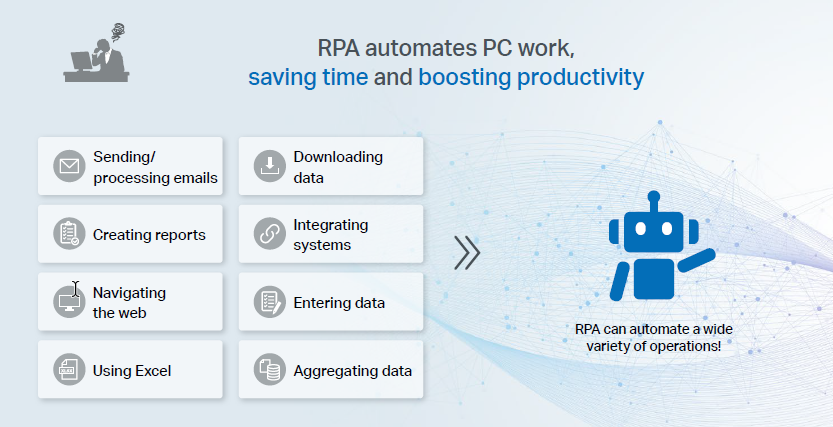
The announcement comes as RPA( https://www.keyence.com/products/software/rpa/rk/ ) moves beyond IT roadmaps and into day-to-day operational backlogs—finance teams reconciling spreadsheets, HR teams updating employee information and timecards, operations teams compiling reports, and customer service teams handling repetitive inbox-driven tasks. In those environments, the friction isn’t only technical; it’s time, confidence, and continuity when workflows change.
“Companies don’t need another mandate to ‘automate more,’” said Logan Asche, Dire—ctor of Process Automation, KEYENCE Corporation of America. “They need a way for busy teams to create a first automation quickly, understand what it’s doing, and keep it running even after the original creator is gone.”
Converting daily spreadsheet tasks into quantifiable time savings
In a recently published customer example( https://www.keyence.com/products/software/rpa/resources/rpa-case-studies/afo.jsp ), American Furniture Outlet (AFO) describes how it reduced a daily spreadsheet task from 45 minutes to under five minutes after adopting KEYENCE RK.
In the example, Andres Tovar, CEO of American Furniture Outlet, describes a common starting point for automation efforts: trying a low-cost or “free” tool, then discovering that the real cost can be the time required to learn it without meaningful guidance or support.
AFO’s most concrete early win centered on a task that used to consume a significant portion of the CEO’s morning. According to the case study, Tovar previously spent “upwards of 45 minutes each morning” manually downloading inventory guides into Microsoft Excel and transforming the data into AFO’s internal inventory format. After automating the workflow, the example reports the scenario runs in less than five minutes—“equating to upwards of 20 hours of time savings each month.”
As adoption expanded, AFO also describes additional scenarios, including cross-referencing and listing products across multiple systems—work the company characterizes as error-prone and high-risk when handled manually.
“If anyone is doing repetitive processes manually, they are absolutely missing out,” Tovar said.
How RK removes common RPA adoption barriers
KEYENCE’s RK frames adoption around three types of support:
1) Navigation support (guided build experience)
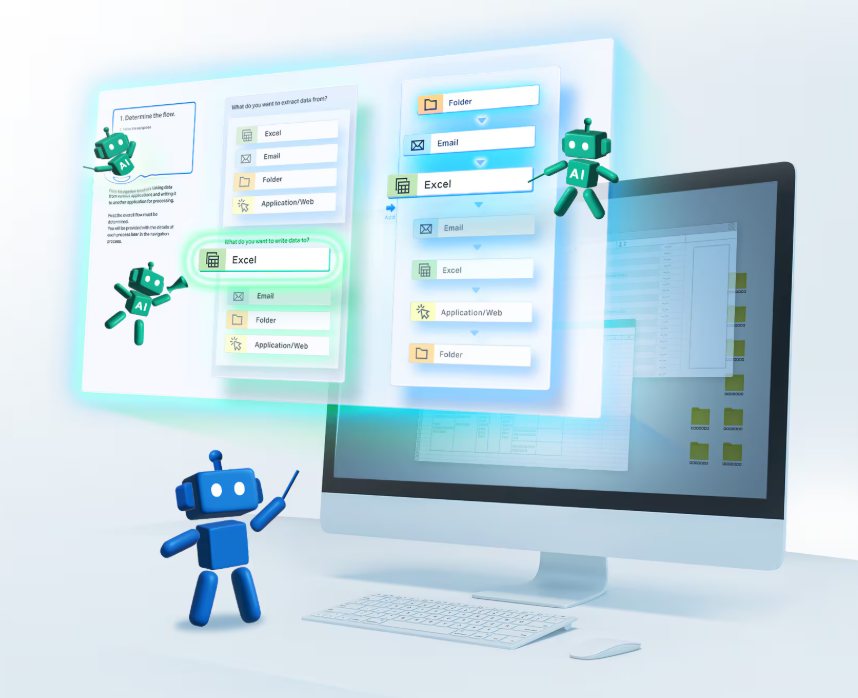
RK includes “Flow Navigation,” a guided method that breaks scenario creation into a simplified two-step approach: users first outline the process flow, then follow step-by-step navigation instructions to complete the scenario.
2) Personal support
KEYENCE’s dedicated Customer Success team delivers personalized support tailored to each customer’s unique processes and operational needs. By working closely with clients, the team ensures seamless onboarding, provides expert guidance, and offers ongoing assistance to help organizations fully leverage automations.
3) AI assistance
Beyond initial setup, RK’s “AI Navigation” is geared towards supporting users at the four key points where workflows most often encounter challenges:
- Scenario generation: users enter a summary of the task to be automated and receive a generated scenario outline they can edit.
- Scenario optimization: AI reviews an existing scenario and identifies areas to optimize for efficiency and stability.
- Troubleshooting: when errors occur, the AI delivers clear explanations and actionable suggestions for correction.
- Documentation: AI creates scenario summaries intended to make workflows easier to share and maintain.
Together, these features reflect a shift in how automation software is being evaluated: not only “Can it automate?” but “Can a team build and sustain automation without creating a new single point of failure?”
Why this matters now
Generative AI has changed expectations inside the workplace—teams increasingly assume routine work should be easier to streamline. At the same time, organizations are navigating governance, auditability, and continuity concerns: an automation that only one person understands can become an operational risk.
KEYENCE says its focus with RK is to reduce the dependency on specialized creators by pairing guided setup and recording-based development with AI support for troubleshooting and documentation—areas that often determine whether automations stick.
Availability
KEYENCE’s RK-10 “AI Navigation RPA” is available through KEYENCE Corporation of America.
About KEYENCE
KEYENCE designs, manufactures, and delivers high performance sensors, machine vision systems, precision measurement instruments, laser markers, barcode readers, digital/3D microscopes, and more. Backed by global R&D and local technical support, KEYENCE solutions help customers improve their research, improve production quality, boost productivity, and reduce production and operational costs.
Marketing
KEYENCE CORPORATION OF AMERICA
email us here
Legal Disclaimer:
EIN Presswire provides this news content "as is" without warranty of any kind. We do not accept any responsibility or liability for the accuracy, content, images, videos, licenses, completeness, legality, or reliability of the information contained in this article. If you have any complaints or copyright issues related to this article, kindly contact the author above.
