

AndaSeat Details Phantom 4 Design Philosophy as Chair Usability Research Shifts Focus to Better-Used Controls
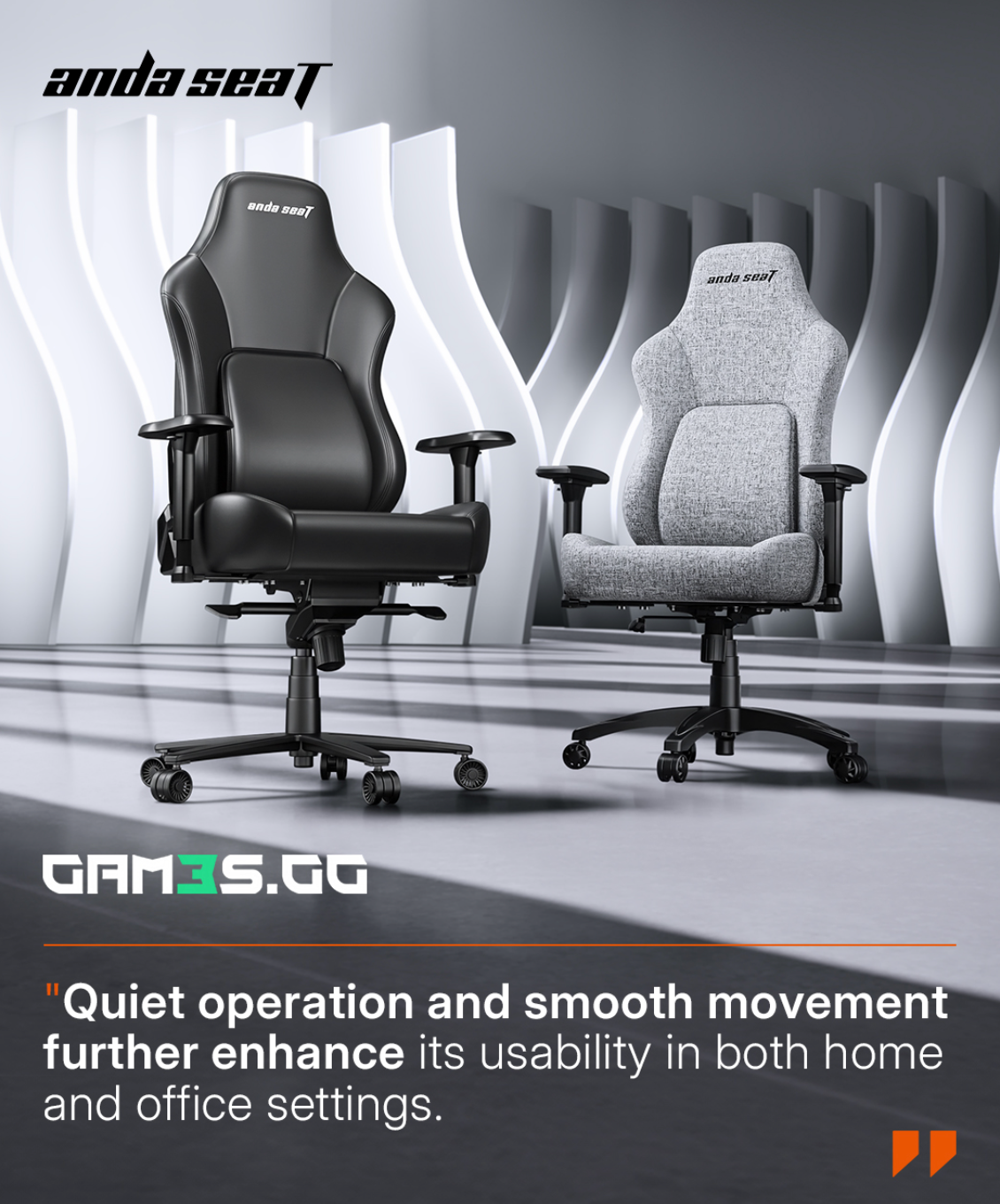
Phantom 4 AndaSeat
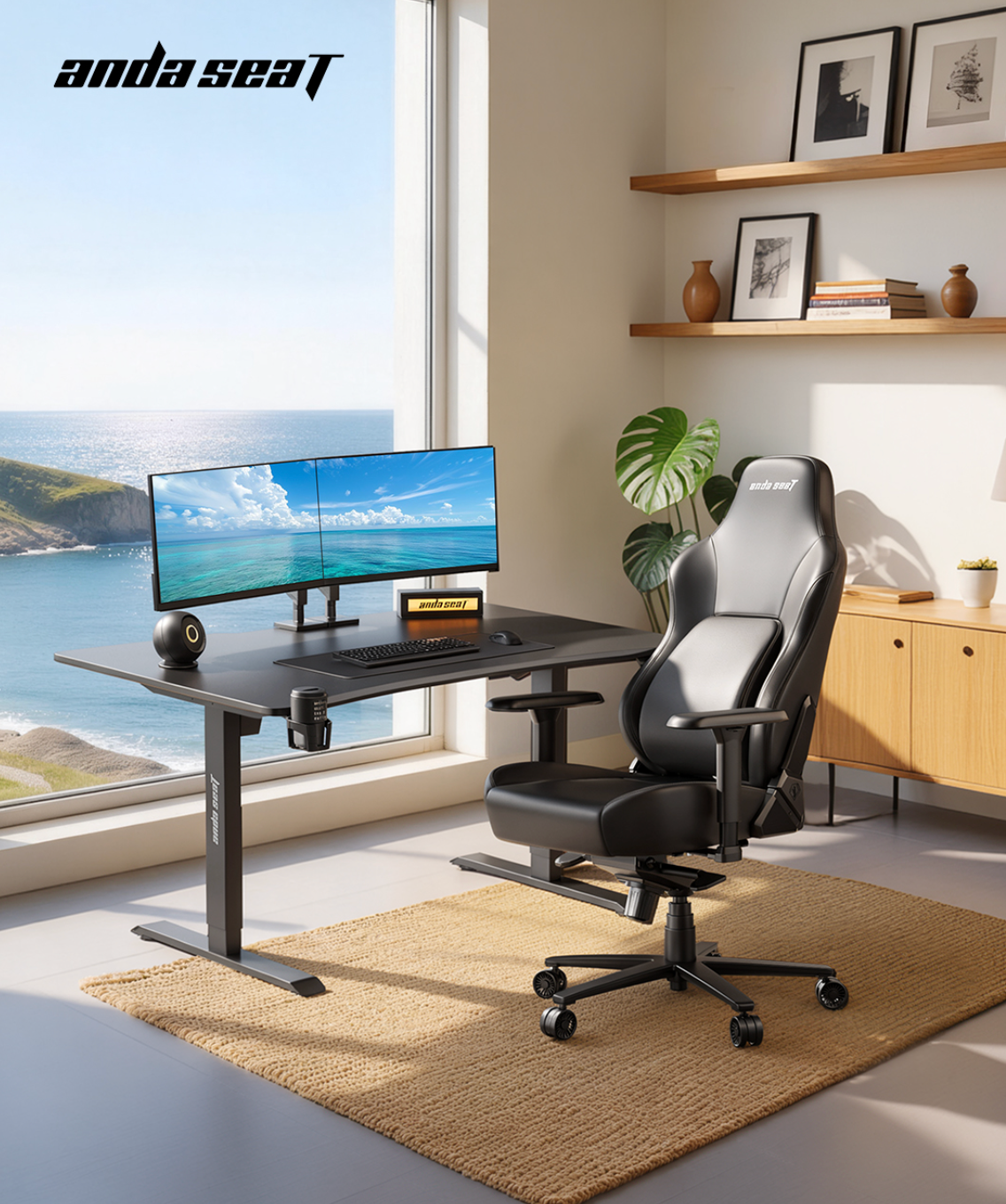
Phantom 4 Series
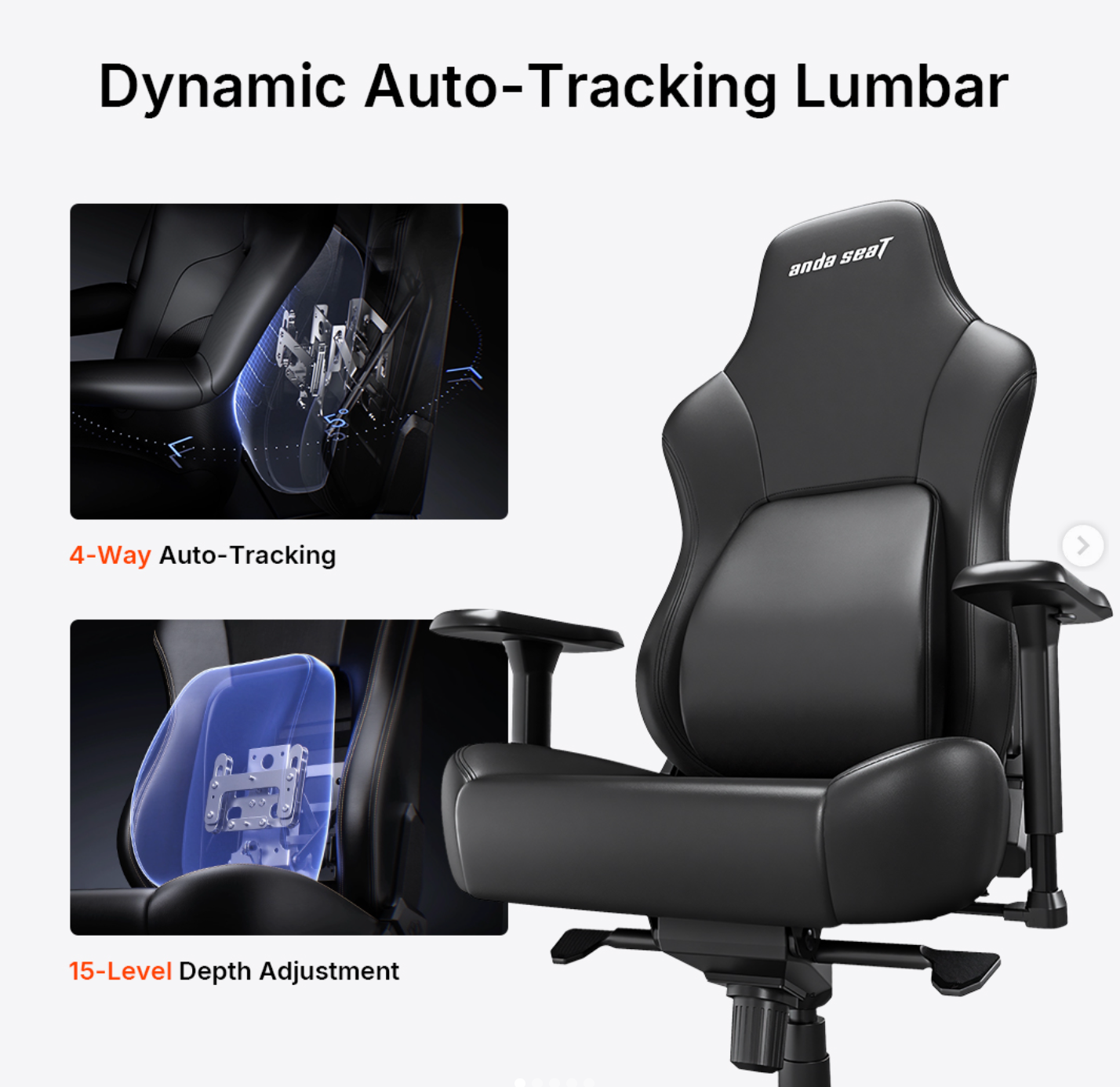
Phantom 4 Series Feature
AndaSeat Details Phantom 4 Design Philosophy as Chair Usability Research Shifts Focus to Better-Used Controls
SPOKANE, WA, UNITED STATES, September 11, 2026 /EINPresswire.com/ -- AndaSeat is detailing the design philosophy behind its Phantom 4 Series ergonomic gaming chair as ergonomics research places renewed attention on an often-overlooked part of adjustable seating: whether users can understand and make practical use of the controls a chair provides.Modern ergonomic chairs can incorporate controls for height, lumbar depth, backrest angle, rocking tension, seat position, armrests and head support. Increasing the number of adjustable functions can expand the range of possible configurations, but research suggests that availability alone does not guarantee those functions will be used.
A 2025 study published by the Journal of the Ergonomics Society of Korea evaluated the usability of seven office-chair adjustment functions. Researchers compared two chairs, including one developed with improved control usability, and measured completion time and operating errors among 15 participants. The improved control design produced significant usability gains in several functions, particularly seat, armrest and lumbar adjustments. The authors concluded that office-chair research should consider the usability of controls alongside conventional measures such as specifications and pressure distribution.
That finding builds on an earlier field study of office-chair adjustment behavior. Workers in that study had an average of 5.39 adjustable chair functions available, but knew about an average of only 2.51 and reported using 1.86. Cognitive barriers were more strongly associated with limited adjustment knowledge and use than physical or organizational barriers.
The studies did not evaluate AndaSeat or the Phantom 4 Series. They nevertheless illustrate the design question behind Phantom 4: should ergonomic development continue adding manual controls, or should some adjustments become more responsive after the user has established a preferred starting point?
AndaSeat chose the second approach for the chair's central lumbar system.
Adjustability Has Value Only When It Becomes Usable
Public ergonomics guidance also distinguishes between having controls and being able to use them effectively.
OSHA's computer-workstation checklist states that chair adjustments should be straightforward and easy to perform while the user remains seated. CCOHS similarly recommends controls that can be operated from a sitting position and are logical in both placement and function.
This principle influenced the Phantom 4 Series design philosophy.
Rather than requiring the user to manually control every change in lumbar angle each time the torso moves, Phantom 4 divides adjustment into two levels.
The first is deliberate adjustment: the user chooses how much lumbar support is wanted.
The second is responsive adjustment: once that setting has been established, the mechanism accommodates smaller movements within the chair.
This separation became the foundation for AndaSeat's first dynamic auto-tracking lumbar system.
The User Sets the Depth; the Mechanism Handles Smaller Movements
The Phantom 4 lumbar structure provides 15 locking depth positions across a 0–95 mm range.
The user can extend the lumbar section forward when more pronounced back contact is preferred or retract it when a flatter backrest relationship is desired.
That is the intentional part of the interaction.
Once extended, the lumbar mechanism introduces the responsive layer. It can swivel approximately 5 degrees to either side and tilt up to 25 degrees forward or backward as the user's back shifts against it.
In design terms, Phantom 4 therefore does not remove user control.
Instead, it asks the user to make the decision that carries the most personal preference — how much lumbar projection is wanted — while allowing the mechanical structure to respond to smaller changes in body position after that decision has been made.
The chair does not automatically determine an ergonomically correct position, nor does the tracking mechanism replace the need for users to establish an appropriate workstation setup.
Its purpose is narrower: reducing the number of small manual corrections required to maintain contact with an already selected support setting.
This distinction reflects the wider usability problem identified in chair-control research. A function that exists but requires repeated intervention may provide technical adjustability without becoming part of everyday behavior.
Phantom 4 and Phantom 4 Pro Use Different Levels of Control Density
The same philosophy appears in the distinction between Phantom 4 and Phantom 4 Pro.
Both models retain the same central dynamic auto-tracking lumbar architecture, including the 15-level depth adjustment and four-way responsive movement.
They differ in how much manual control is provided around that core.
The standard Phantom 4 uses 2D armrests with vertical and forward-and-back adjustment. Its memory-foam head pillow is mounted using an adjustable elastic strap, and its butterfly tilt mechanism provides a broader 10 cm seat-height range.
Phantom 4 Pro introduces 3D 360-degree rotating armrests with approximately 6 cm of forward-and-back movement and 7 cm of vertical adjustment. The Pro model also uses a magnetic memory-foam head pillow with a cooling layer and approximately 20 cm of vertical attachment range, together with a multi-function tilt mechanism and tilt-lock control.
The two-model strategy reflects a deliberate difference in control density.
Phantom 4 provides the central responsive-lumbar concept with a more straightforward collection of peripheral adjustments. Phantom 4 Pro gives users who want additional control more freedom around arm, head and tilt positioning.
The design philosophy is not that the model with more controls is automatically appropriate for every person. It is that different users may want different levels of intervention while retaining the same motion-responsive core.
A Stable Seat Gives the Responsive System a Reference Point
Automatic movement does not mean every chair component should continuously change position.
Phantom 4 uses a 55 kg/m³ cold-cure foam seat across the series. The molded cushion creates a relatively stable surface beneath the pelvis and thighs while the lumbar section responds to upper-body movement.
This creates another deliberate design contrast.
The seat acts as the reference layer. The lumbar mechanism provides controlled movement above it.
The backrest can recline to 135 degrees and includes approximately 15 degrees of rocking movement, allowing the user to deliberately change the overall torso position rather than requiring the auto-tracking system to perform every form of movement.
In other words, AndaSeat did not design Phantom 4 around maximum automation.
The chair automates the adjustment that can reasonably follow small body movements while keeping larger positional decisions — lumbar depth, recline state, seat height and arm position — under user control.
Usability Extends Beyond the Moment of Sitting
The same focus on reducing unnecessary interaction appears in the chair's assembly and maintenance details.
Phantom 4 uses magnetic side covers around the backrest connection area. The covers align and attach magnetically instead of depending entirely on conventional exposed fastening covers, allowing easier access during assembly or later inspection. AndaSeat states that the design is intended to simplify assembly and maintenance.
This feature does not change the chair's ergonomic geometry, but it reflects a broader product-design principle.
A chair is not experienced only when someone is sitting in it. Installation, adjustment, cleaning and maintenance are also part of the user's interaction with the product.
Reducing unnecessary steps in those processes is therefore part of the same usability philosophy that shaped the dynamic lumbar system.
From Feature Count to Interaction Design
The Phantom 4 Series represents AndaSeat's effort to treat ergonomics as an interaction problem as well as a specification problem.
Research into office-chair controls suggests that increasingly sophisticated adjustment systems create limited value when users do not understand or use them. The 2025 usability study specifically identified lumbar and armrest controls as areas where improved control design could meaningfully change task performance.
OSHA and CCOHS likewise emphasize that chair adjustments should be accessible, understandable and practical to operate.
Phantom 4 translates that principle into a mechanical division of labor.
The user selects the preferred lumbar depth.
The chair handles smaller lumbar movements.
The user chooses the recline state.
The chair provides rocking within the available range.
The user selects the amount of peripheral control needed by choosing between Phantom 4 and Phantom 4 Pro.
The resulting design philosophy is not built around removing choice. It is built around deciding which choices require deliberate human input and which movements can occur naturally after that input has been given.
For AndaSeat, that distinction defines the "Made To Move With You" concept behind Phantom 4 Series: a chair should not require constant attention simply to remain responsive to the person sitting in it.
About AndaSeat
Founded in 2007, AndaSeat develops ergonomic seating and workspace products for gaming, professional and home environments. Its portfolio includes ergonomic chairs, standing desks, monitor arms and related workspace accessories. The company's product-development approach combines structural engineering, material design, adjustability and human-centered interaction principles, with a focus on how users configure, move within and maintain their workspaces over time.
AndaSeat Marketing
AndaSeat
email us here
Visit us on social media:
LinkedIn
Instagram
Facebook
YouTube
TikTok
X
Legal Disclaimer:
EIN Presswire provides this news content "as is" without warranty of any kind. We do not accept any responsibility or liability for the accuracy, content, images, videos, licenses, completeness, legality, or reliability of the information contained in this article. If you have any complaints or copyright issues related to this article, kindly contact the author above.
